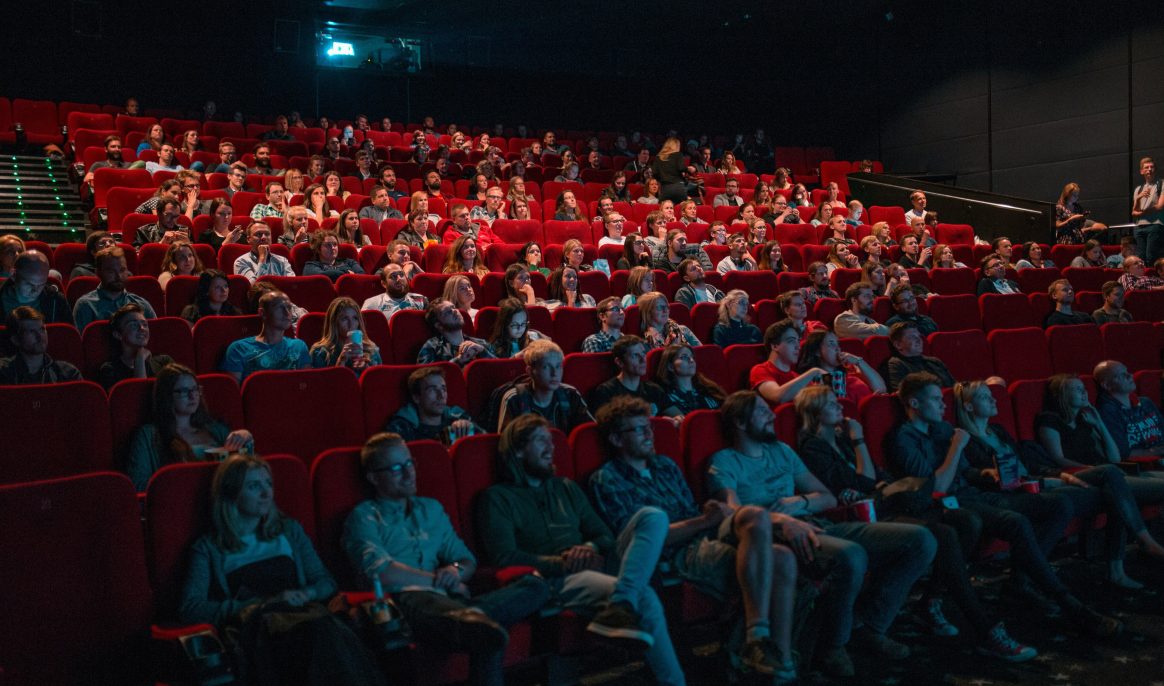
©Krists Luhaers via Unsplash - photo d'illustration d'une salle de cinéma
-
May 26, 2026 18:17
In Canada, a festival is screening films in 1.5x to appeal to Gen Z. A divisive experiment: can cinema adapt to digital rhythms without losing its essence?
At the Rendez-vous Québec Cinéma festival in Montreal, cinema changed tempo. During a special screening of Amour Apocalypse by director Anne Émond, the feature film was shown at 1.5x speed, reducing its running time from 100 to around 66 minutes. The initiative, renamed Les Moins Longs Métrages, has a precise objective: to attract the Gen Z that is increasingly accustomed to short, accelerated content consumed in multitasking mode between streaming and social media networks.
From the big screen to endless scrolling
The idea was based on a now inescapable fact: a large proportion of young viewers claim to watch videos, series and even podcasts at accelerated speed. The festival tried to transpose this habit directly into theaters. The effect is radical: faster dialogue, fewer emotional breaths, compressed narrative rhythm.
And the result is not just a question of duration, but of perception. The tension, character construction and depth of the scenes change shape to become a different work than the original. In this case, cinema adapts to the codes of accelerated digital consumption, closer to TikTok and streaming platforms than to cinematic tradition.
Between curiosity, marketing and cultural provocation
Public reaction was immediate and polarized. Some spectators welcomed the experience with curiosity, appreciating the possibility of "saving time" without giving up on the screening. Others spoke of a controversial choice, almost a constraint on the language of auteur cinema. Critics and industry professionals are asking: is this innovation or an excessive compromise?
The director of Amour Apocalypse herself expressed mixed feelings, acknowledging the gap between her artistic intention and the accelerated version of her film. The debate thus goes beyond the framework of the festival to become a broader reflection on the evolution of the audiovisual industry.
The crux of the problem: attention span
Behind the Canadian experience lies an increasingly pressing question: what happens to our attention? Cinema was born as an immersive experience, built on long durations, silences and expectations. Speeding it up means redefining the relationship between spectator and narrative. On the one hand, some see these experiments as a way of making cinema more accessible to new generations, without losing them in the infinite flow of digital content. On the other, there is a fear of an irreversible loss: that of slowness as a space of meaning.
An open question
Montreal's case doesn't provide a definitive answer, but it does open up a debate that is bound to grow. If culture adapts entirely to Gen Z rhythms, does it run the risk of becoming a fast-moving consumer product? Or is this precisely the way forward in order to prevent cinema from losing its audience of tomorrow? Perhaps the real question is not about speed, but about our ability to choose when to slow down. And in the end, an inevitable doubt persists: should cinema chase the audience's time, or continue to ask them to stop in theirs?
Share: