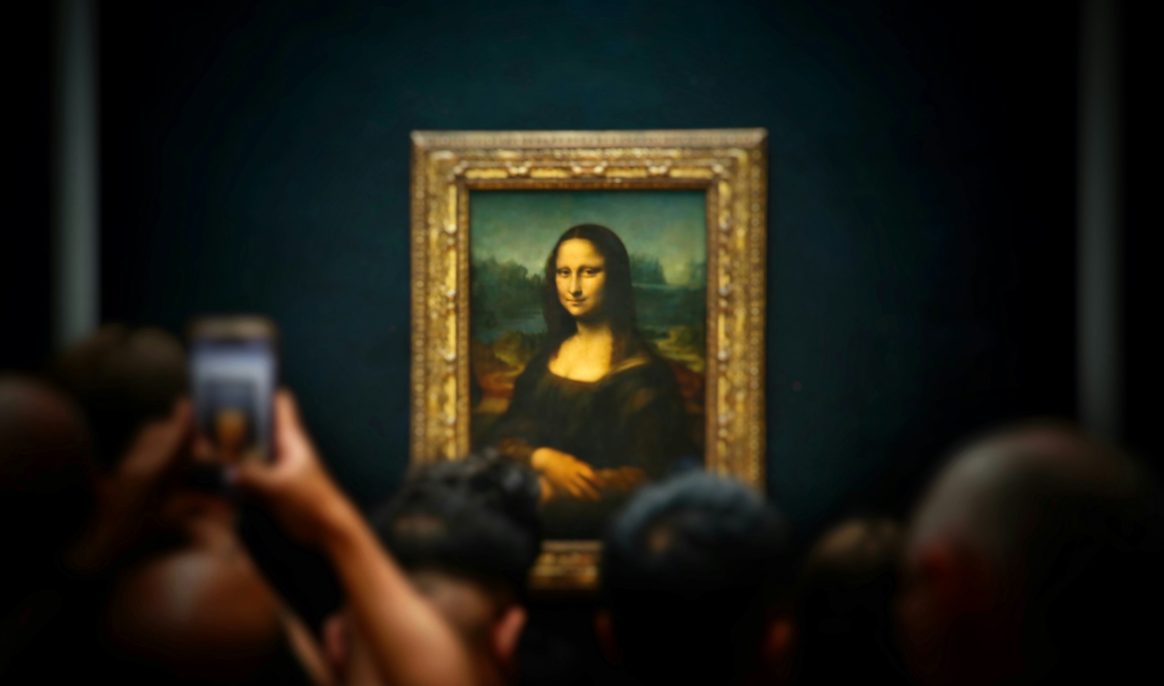
©Bo Zhang via Unsplash - photo d'illustration de la Joconde
-
May 26, 2026 14:05
The Louvre is reorganizing its spaces and isolating the Mona Lisa in a new dedicated building to reduce mass tourism and improve the visitor experience.
The world's most visited museum, the Louvre, has decided to take radical steps to remedy one of its most glaring problems: over-visiting by tourists. The chosen solution is set to change the visitor experience forever: the Mona Lisa will be separated from the rest of the collections.
The objective is clear: to reduce the impact of over-tourism which, in recent years, has transformed museum halls into saturated spaces where the contemplation of art often gives way to the logic of queuing and hurried snapshots.
The Mona Lisa becomes an experience in its own right
The heart of the reform is the creation of a new exhibition space of some 3,000 square meters, entirely dedicated to the Mona Lisa. The idea is to dissociate visitor flows: those who enter solely to admire the famous painting will be able to do so without having to cross the entire museum, while those who wish to explore the other collections will circulate in more fluid conditions. This choice is based on a striking figure: every day, some 20,000 people concentrate exclusively on admiring the famous portrait, generating a constant pressure that spoils the entire contemplative experience.
A direct response to crowd chaos
According to the museum's management, the current situation is no longer tenable. The Mona Lisa room has become an almost independent pole of attraction, but also a bottleneck that compromises the entire visitor experience. The intervention therefore aims to separate two incompatible experiences: on the one hand, the rapid, iconic consumption of the masterpiece; on the other, the traditional museum itinerary, made up of hundreds of works often ignored by tourists in a hurry.
A billion-dollar renovation to redesign the museum
The project is part of a wider, billion-dollar transformation plan designed to modernize the museum's infrastructure and interior circuits. In addition to the new space dedicated to the Mona Lisa, separate underground accesses, new catering areas and a reorganization of the galleries are planned. The ambition is also to restore the museum's vocation as a place for a slow cultural experience, as opposed to the "lightning" visit fueled by global mass tourist flows.
The paradox of success: when art turns into a crowd
The Louvre's case illustrates an increasingly common phenomenon: the more famous a work of art is, the more likely it is to be stifled by its own popularity. The Mona Lisa has become a global symbol, but also a point of tension that undermines the museum's entire equilibrium. The new configuration therefore represents a radical choice: not to eliminate mass tourism, but to channel it so that it does not destroy precisely what makes a visit unique. The experiment could very well serve as a model for other major museums around the world.
Source: French Ministry of Culture
Share: