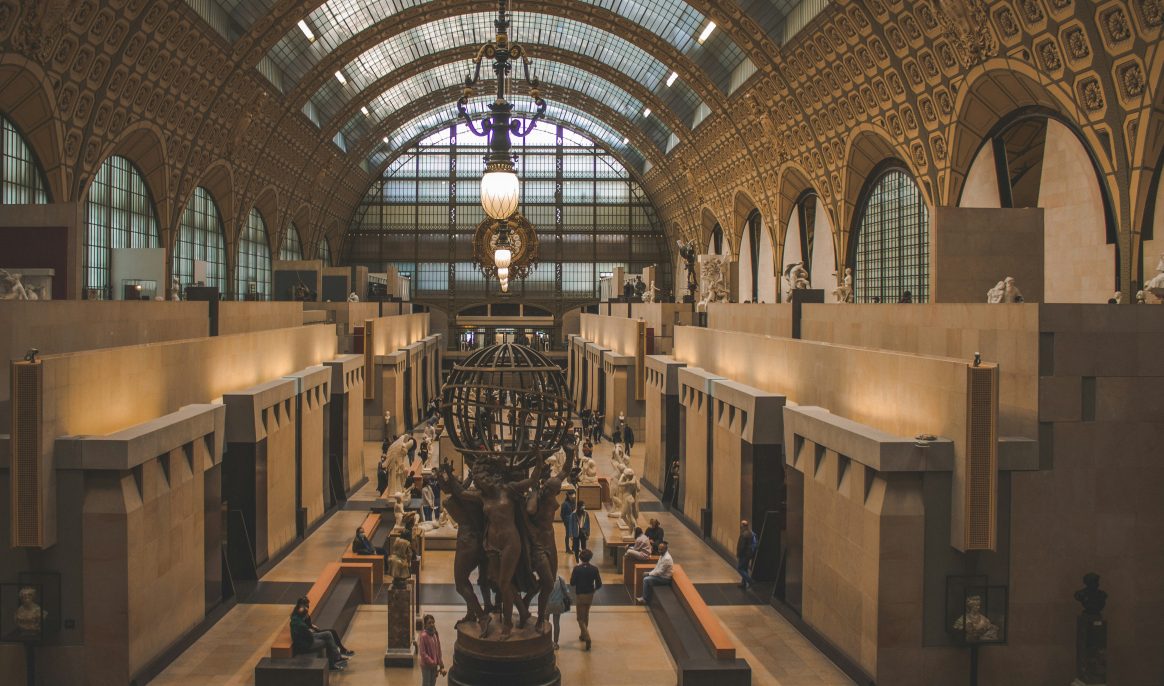
©Diane Picchiottino via Unsplash - photo d'illustration du Musée d'Orsay
-
May 29, 2026 12:15
The Musée d'Orsay is opening up a room dedicated to works looted by the Nazis during the Occupation and never returned. From Renoir to Degas, the search for their owners continues, with additional help from artificial intelligence.
In the heart of the Musée d'Orsay in Paris, among the masterpieces of Impressionism and the most visited rooms in the world, one question resonates like an open wound: "Who do these works of art belong to?" This is the title of the new room inaugurated on May 5, 2026 and dedicated to the MNR, an acronym that stands for works of art recovered after the Second World War and entrusted to French museums pending their restitution.
This is no mere exhibition. These paintings and sculptures don't actually belong to the museum: they are works of art kept on deposit, often taken from Jewish families during Nazi persecution and the looting policies implemented in occupied France by the Vichy regime.
Systematic looting during the Occupation
Behind each painting on display lies a story of confiscation, forced sale, escape and deportation. As early as the 1930s, the Nazi regime launched a vast operation to appropriate cultural property belonging to the Jews of Europe. In France, during the Occupation, this bureaucratic and ideological machine resulted in organized seizures and the dispersal of private collections, which were quickly resold on the art market.
By the end of the war, some 60,000 items of cultural property had been recovered between Germany and Austria. Most were returned to their rightful owners, but some 15,000 works remained without a clear identity. The French state sold a large proportion of these in the early 1950s, while some 2,200 works were entrusted to national museums with the special status of MNR, for Musées Nationaux Récupération. Today, the Musée d'Orsay still holds 225 of these works.
Renoir, Degas and Cézanne: each work is an open investigation
The new room features thirteen works in rotation, paintings and sculptures by artists such as Renoir, Degas, Cézanne, Rodin and Boudin. But here, artistic value is permanently interwoven with history and the human element. Some provenances have been precisely reconstructed. Others remain incomplete, fragmentary, buried in scattered archives or documents destroyed by the war.
Each work represents an open file, an investigation involving art historians, genealogists and specialists in provenance research. The museum wishes to involve the public in this process. The works are not exhibited simply as objects to be admired, but as witnesses to a memory in search of answers.
Research continues, also thanks to artificial intelligence
Over the past thirty years, the Musée d'Orsay has succeeded in returning fifteen MNR works to the descendants of the families who owned them. It's a slow, complex process, often hampered by a lack of documentation. Today, these investigations also rely on digital tools, online databases and artificial intelligence. These technologies make it possible to cross-reference international archives, auction catalogs and historical documents with a speed that was unthinkable just a few years ago.
According to the French authorities, many files remain open. For this reason, the new room is not intended to be a static space, but one that will evolve as new discoveries and future restitutions are made.
A museum that also exposes the weight of history
The opening of the MNR room marks an important stage in the relationship between museums and historical memory. The Musée d'Orsay doesn't just show works of art: it also exposes the void left by the people from whom these works were taken. Eighty years after the end of the war, the question remains unanswered for hundreds of paintings and sculptures. And it is precisely this uncertainty that makes the new room one of the strongest and most symbolic places in contemporary Paris.
Source : Musée d'Orsay
Share: