
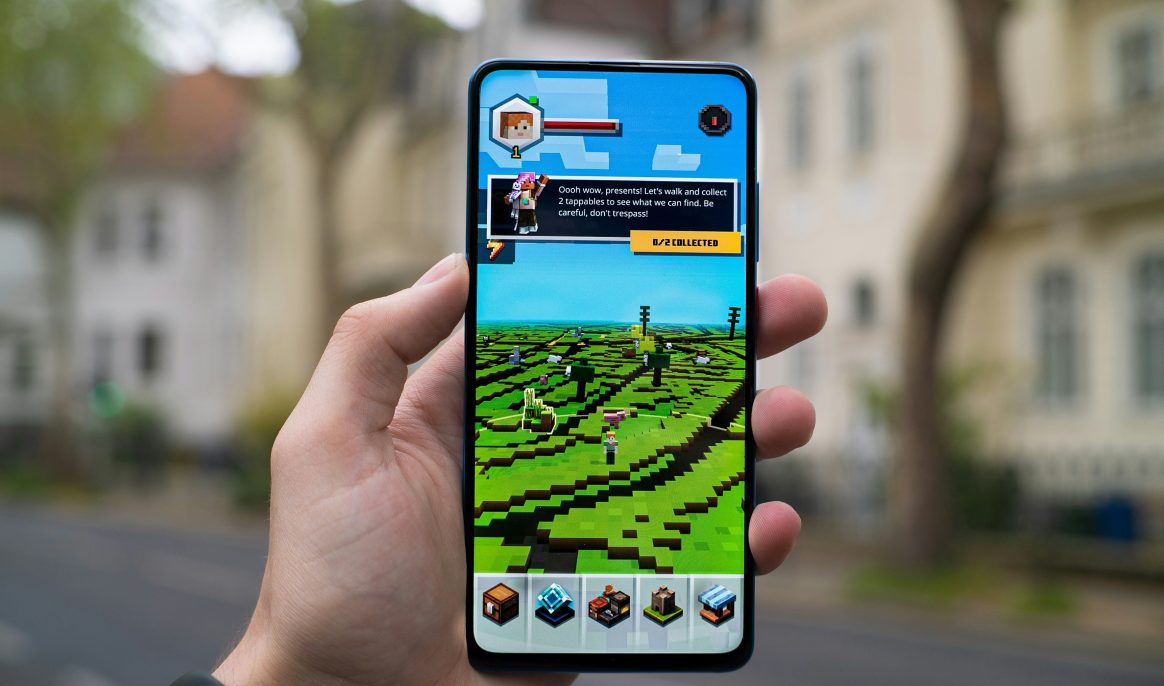
©Mika Baumeister via Unsplash - photo d'illustration d'un jeu pour smartphone
-
Jul 03, 2026 15:11
The mobile gaming landscape has been shaken up by an idea as simple as it is mind-boggling. Entirely developed by independent programmer Sebastian Seidel, known in the community by the username “NineToFiveDude,” the video game CatchCat lets you frame a real-life cat and instantly transform it into a unique digital element. Here’s how it works.
The game works using your phone’s camera: an onboard artificial intelligence system analyzes the animal in real time, verifying that it’s a real-life encounter and not a royalty-free photo taken from the web. Once authenticity is verified, the software generates a 3D collectible card featuring a name, a rarity level (indicated by a color code ranging from common gray to legendary orange), and unique personality traits. These stats aren’t just for show—they determine the attack and defense stats used in Alley Clash, a competitive mode where players can battle their friends’ teams in virtual street fights.
Why the game went viral where larger projects failed
While giants in the video game industry invest astronomical marketing budgets without any guarantee of success, CatchCat recorded thousands of downloads within the first 24 hours—at no cost. Sebastian Seidel successfully merged the internet’s longstanding obsession with cats with the structure of location-based games. The game went viral organically on social media, where users began sharing screenshots of their finds and joking about the cats they encountered on their commute to and from work.
The monetization model isn’t aggressive: the experience is based on a “food cans” economy, the virtual currency needed to attempt a capture. Users of the free version benefit from an automatic refill over time, while a subscription to the Pro version speeds up recovery times to prevent the gameplay from turning into a constant monetary transaction.
The comparison with Pokémon Go only holds up to a certain extent
Although parallels with the famous Pokémon Go emerged as soon as it launched, their underlying philosophies remain opposite. Where the Japanese giant superimposes digital monsters onto the real environment via augmented reality, CatchCat removes these artificial layers to highlight what already exists. The barrier to entry is virtually nonexistent: there are no arenas to conquer or complex coordinates to enter, just a visual log that maps general sighting areas without infringing on property owners’ privacy. Local data processing ensures that no photos are sent to external cloud servers, thereby protecting the safety of neighborhood cats.
What’s missing and what’s coming next for the App
Currently, the game is available exclusively for Android devices on the Google Play Store. The technical limitation excludes a huge portion of the casual audience, but Sebastian Seidel has confirmed that the iPhone version is already in an advanced stage of development. The roadmap for the remainder of 2026 calls for expanding Alley Clash’s features as well as introducing social tools designed to leverage community reports to help pet owners find their lost pets in the neighborhood.
Source: CatchCat
Share: