©Dmitrii Zhodzishskii via Unsplash - photo d'illustration
-
Jul 20, 2026 11:12
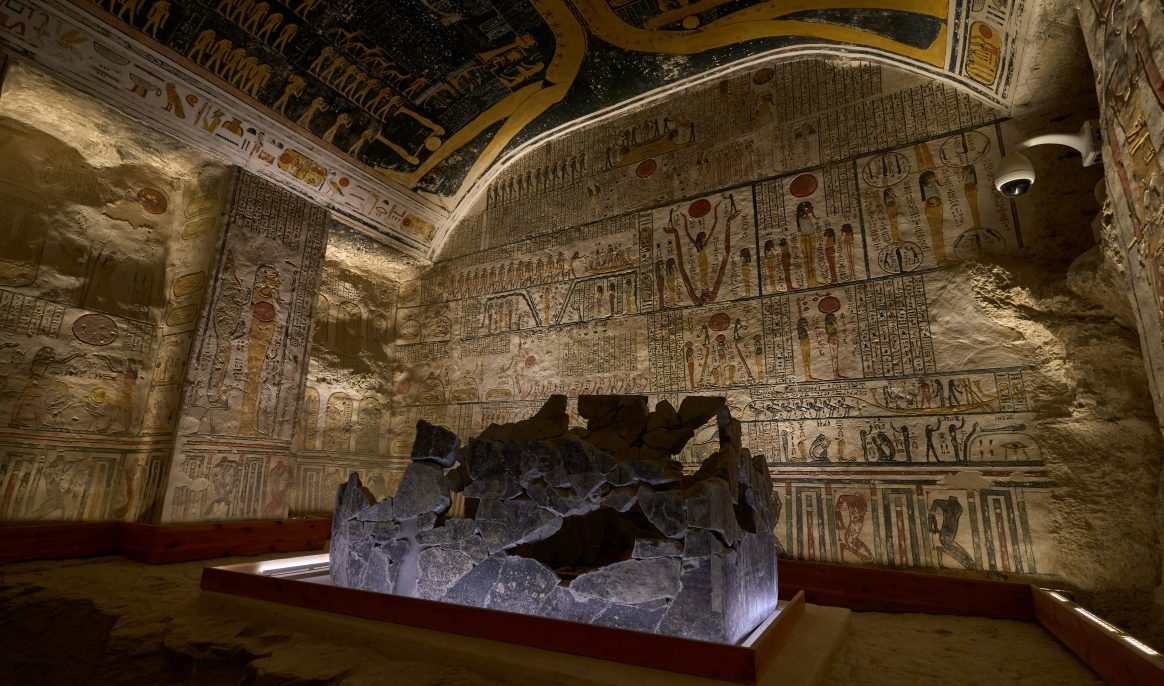
On the shores of the Mediterranean, about 100 kilometers from Alexandria, Egyptian archaeologists have unearthed eighteen tombs dating from the Ptolemaic or Roman periods, between 322 B.C. and 395 CE.
Among the many buried objects, researchers discovered twenty-four gold amulets shaped like tongues. These were most likely placed in the mouths of the deceased to enable them to communicate with the gods.
Since gold was regarded as the flesh of the gods in ancient Egypt, these artifacts played a crucial role in the transition to the afterlife.“They are generally interpreted as funerary amulets, intended to allow the deceased to speak in the afterlife, particularly during the judgment before Osiris,” says Hesham Hussein of the Egyptian Ministry of Tourism.
The excavations also revealed an altar resembling a false door. Hesham Hussein notes that, “in traditional Egyptian beliefs, [the false door] symbolized the interface between the world of the living and that of the dead.”
Nuance, always nuance
Examination of these treasures—which also include an amulet in the shape of the Eye of Horus (the falcon-headed god associated with war and the sky) to ward off the evil eye—has sparked debate among experts.
- An ear of wheat rather than a tongue? Archaeology professor Attilio Mastrocinque suggests, after analyzing the photos, that one of the gilded objects might in fact represent an ear of wheat, an ancient symbol of fertility. Artifacts similar to the silver ears of wheat have already been discovered in Roman sanctuaries across Europe.
- The authenticity of the “false door” is being called into question: now it is the turn of archaeology professor Krzysztof Jakubiak ( University of Warsaw) to urge caution.“I would remain cautious before drawing a direct comparison between the iconographic motifs visible on the discovered altar and those specific to the iconography of false doors,” explains the expert. In his view, the altar may simply be unfinished.
A cultural crossroads
In addition, the site yielded an incomplete statue of Aphrodite as well as a granite sarcophagus that remains sealed. These finds confirm the multicultural richness of this ancient Egyptian community.
According to Dorota Dzierzbicka, director of the expedition, these discoveries shed light on “a culturally diverse community, where Egyptian and Greco-Roman traditions coexisted and intermingled in both daily life and funerary practices.”
Share: