©Daniel Sturgess via Unsplash
-
May 18, 2026 10:39
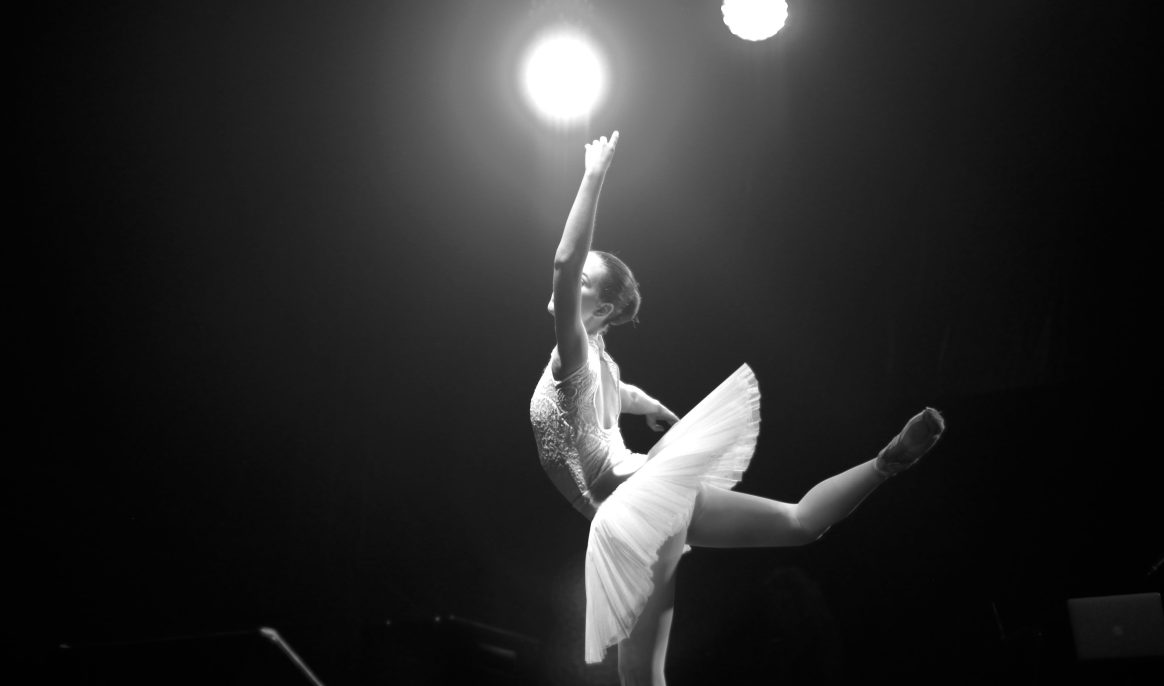
In Amsterdam, on the stage of the OBA Theater Amsterdam, dance took on a entirely new form. A ballerina suffering from amyotrophic lateral sclerosis (ALS) returned to the stage, not with her own body, but through a digital avatar driven by her brain waves.
A suspended moment that turned the very concept of performance art on its head. The project's protagonist, Breanna Olson, had built her artistic identity on contemporary dance from an early age. While the neurodegenerative disease has gradually caused her to lose motor control, it has not taken away her ability to imagine movement.
Technology translates thought into dance
At the heart of this experiment lies a sophisticated brain-computer interface, developed by Dentsu Lab in collaboration with NTT. Using an EEG headset, electrical signals from the dancer's brain are recorded and translated into digital instructions. When Breanna Olson imagines a choreographic gesture, the system interprets it and transforms it into movement for a mixed-reality avatar, projected onto the stage. The result is a dance suspended between the real and the virtual, where creativity is no longer driven by muscles, but by neural activity.
"Waves of Will": a project that gives shape to the invisible
The performance is part of the "Waves of Will" project, an initiative that explores new forms of expression for people with motor disabilities. The aim is not to replace the body, but to restore an artistic identity using cutting-edge technological tools. Breanna Olson recounts how complex the process is: to control the avatar, you have to achieve an extremely high level of concentration, ignoring extraneous thoughts and external stimuli. It's a real mental exercise, but one that has enabled her to rediscover a form of creative freedom.
A new way of thinking about disability and creativity
During the performance, the avatar danced alongside other real dancers, weaving a dialogue between physical and digital presence. The audience discovered a new choreographic language, where movement is born directly from the mind. For Olson, this moment on stage marked a return to artistic life: an experience that rekindled a connection with dance lost through illness. Technology, in this case, doesn't replace art, it extends it, broadens its scope.
According to the researchers involved, similar systems could one day be applied to everyday devices such as intelligent wheelchairs or advanced communication tools. The Amsterdam performance thus marks a turning point: not just a technological experiment, but also a powerful statement about what it means today to create, express oneself and dance, even when the body can no longer do so in the traditional sense.
Share: