© Etienne Tordoir
-
Jul 21, 2026 12:00
He was born in 1948 in Dole, in the Jura region, into a large, devoutly Catholic family of six children, but he eventually turned his back on the cross and holy water in order to embrace a joyfully delirious grammatical freedom.
As a teenager, however, he seriously considered the priesthood and entered the minor seminary, where he remained for four long years before switching to the University of Besançon to study psychology. In the end, the mischievous spirits of the yyé—led by Johnny Hallyday and Claude François—didn’t have too much trouble steering him away from the Holy Gospels…
It was also in the capital of the Jura region that he crossed paths with guitarist Claude Mairet, with whom his career would remain closely linked for a long time. Together, they created a unique soundscape off the beaten path, reminiscent of the worlds of Christian Decamp (Ange) and even Christian Vander (Magma)…
In 1973, while struggling to make ends meet in Paris, he created his first uncompromising show: “Comme un chien dans un cimetière.” He met a band called Machin (no relation to Michel Fugain’s Big Bazar). Together, with arrangements by Tony Carbonare (also from the Jura region), they produced a handful of folk-rock albums that were, even at the time, quite off-the-wall. The titles of the different parts of their trilogy speak for themselves: “…any living being plugged into the grid is bound to be moved…” ” (1978), “Permission to Rave” (1979), and “Of Love, Art, or Pig?” (1980). Thiéfaine thus carved out a niche for himself on the fringes—or even in outright marginality—but gradually welcomed those who rebelled against music that was too formulaic into his circle. Right up to “Géographie du vide,” his 18th and most recent album released in 2021, the rascal never wavered from his course.
The man sometimes described as the “dark angel of French rock” undoubtedly views the Top 50, gold records, and other 'Victoires de la Musique' awards as nothing more than inventions of Beelzebub designed to divert him from his path. Nevertheless, he feels a kinship with a certain raw, stripped-down blues and recorded two albums in the United States in which the pain of this music of struggle begins to emerge: “Chroniques bluesymentales,” recorded in New York in 1990 with Barry Reynolds, and “Fragments d’hébétude,” which was released a year later in Los Angeles with the collaboration of guitarist Chris Spedding. Subsequently, Thiéfaine continued to collaborate with other guitarists such as Arman Méliès, Jipé Nataf (Les Innocents), and then, sporadically, with his son Lucas starting in 2006 and on a more permanent basis since 2015.
Despite a deliberately low-key media presence, Thébaine enjoys the unwavering support of an extremely loyal fan base. He certainly doesn’t display them on his mantelpiece, but most of his albums have been certified “gold,” which, these days, borders on a feat. The stylistic uniqueness of his work is now studied—even dissected—at certain universities. My little finger tells me that this troublemaker of the French language still felt a certain pride when the first doctoral dissertation on his work was successfully defended at Paul Valéry University in Montpellier in October 2025.
Concerts:
Friday, October 25: Le Forum - Liège (Belgium)
Friday, January 22, 2027: Cirque Royal - Brussels (Belgium)
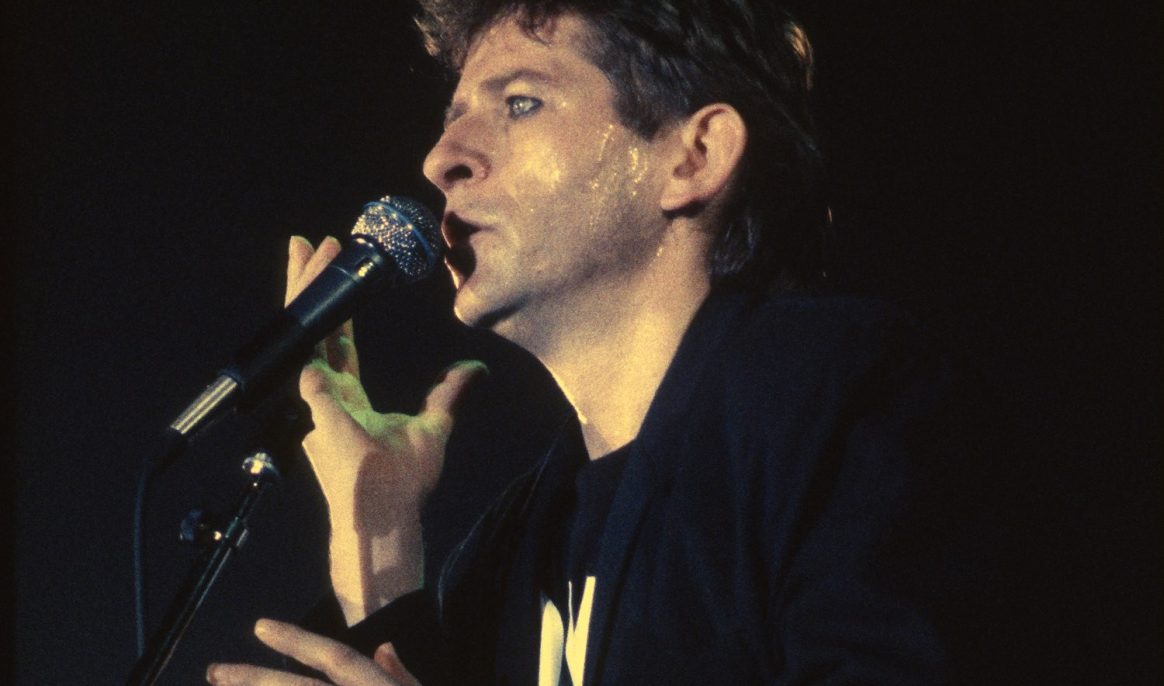
Photo: Hubert-Félix Thiéfaine on stage at Les Halles de Schaerbeek in Brussels (Belgium) on July 18, 1991
Share: