Picture : © Etienne Tordoir
-
May 02, 2026 10:30
Bruce Howard was born in 1961 in Haddington, Scotland, and belongs to the "blue eyed soul" movement - artists from the north influenced by soul as much as by new wave.
After five years wandering around Darwin, Australia with his family, Howard (who had not yet donned the Dr. Robert costume) returned to the Highlands where, titillated by the emerging new wave, he decided to make the most of his multiple talents. A gifted singer and songwriter, but also an excellent guitarist and pianist in his spare time, he decided that the best shaker for all these quality ingredients could only be a band. This is how the Blow Monkeys, with Neville Henry 's omnipresent saxophone and generous, undeniably soulful orchestrations, appeared somewhere in 1984 in the English capital.
Following in Simply Red's footsteps a little too quickly, the quartet quietly laid the foundations of their career with the album "Limping For A Generation", which went somewhat unnoticed. But their breakthrough came two years later with "Animal Magic" (1986), with its melodic luxuriance, funky flavour, intoxicating female backing vocals and early hits such as "Digging Your Scene", "Wicked Ways" and "Sweet Murder". And behind the heady dance veneer, the good doctor always comes up with a social (or sociological) prescription for his most loyal patients. In the background, "Digging Your Scene" touches on the unenviable lot of homosexuals of the time when AIDS was often fatal. Two years later, in a fit of pique against Margaret Tatcher, nicknamed the "Iron Lady" (Prime Minister of England at the time), he reminded her not to forget her humble origins by entitling the group's second album "She Was Only A Grocer's Daughter". "It Doesn't Have To Be This Way", featured on the soundtrack of Police Academy IV, would go on to become the Blow Monkeys' biggest hit. Of course, it's hard to stay in the same position once you've reached the top so quickly. The next two albums, though not without merit, delved a little deeper into the dance groove. By teaming up with Chicago's Kym Mazelle for "Wait" (1989), Dr. Robert was one of the first to import the American garage sound to Albion. But in 1990, it was time for a break that would last almost 18 years.
The Blow Monkeys plunged into lethargy, and Dr. Robert continued a prolific solo career studded with collaborations with the likes of Paul Weller (ex- Jam and Style Council) and Beth Orton (Portishead) for his album "Central Reservation" (1999).
Before reforming the Blow Monkeys in 2007 around the original members, Dr. Robert released three calmer albums under his own name, including the excellent "Birds Gotta Fly" (2001).
Having seen him live again just a handful of years ago, I can tell you that Dr. Robert has lost none of his unique vocal qualities. More than four decades after their advent, the Blow Monkeys are still as interesting as ever. To convince yourself of this, listen to the album "Together/Alone" (2024) or the recent single "Birdsong " (2025).
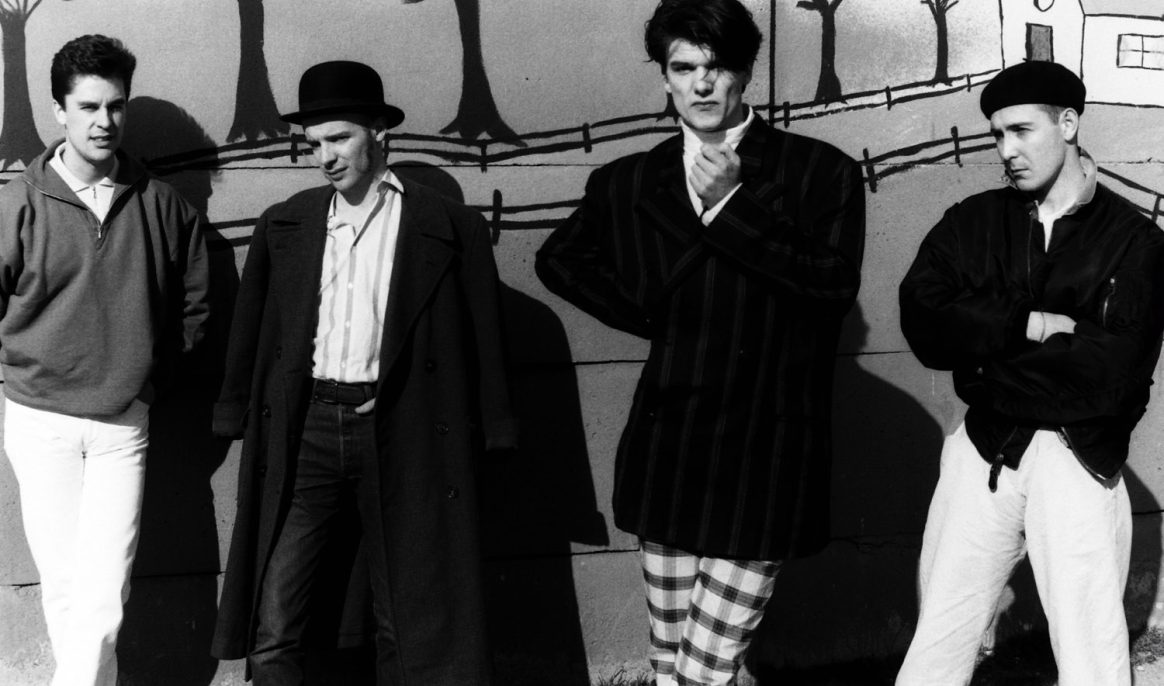
Photo: Bruce Howard alias Dr. Robert with The Blow Monkeys on the set of the TV show "Bingo" in Brussels (Belgium) on March 9, 1987.
Share: