
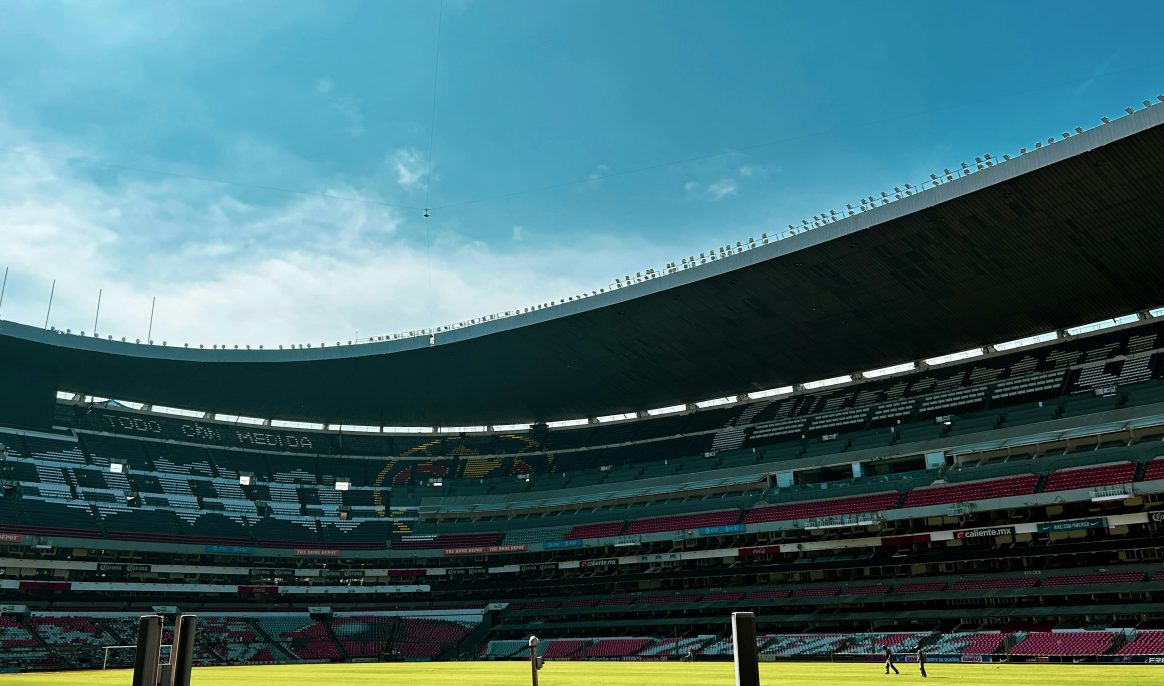
©Alberto GG via Unsplash - photo d'illustration du stade Azteca de Mexico
-
Sep 12, 2026 10:00
Mexico City’s Azteca Stadium, one of football’s greatest temples, is once again in the international spotlight—but this time for reasons far removed from sporting triumph. The stadium, famous for Maradona's hand of God in 1986 as well as for hosting two World Cup finals, has now been placed under direct surveillance by NASA, becoming the first stadium in the world to be placed under space surveillance due to ground movement.
The alert concerns the structural stability of the area on which the stadium stands, where progressive sinking of the ground has been detected. The stadium is located in an area of the capital already known for ground sinking phenomena, mainly linked to the intensive exploitation of underground water.
Sinking and alarming data
According to surveys, Mexico City's soil is sinking at a rate of up to 1.5 centimetres per month. This data, if confirmed over the long term, represents a serious risk factor for large-scale infrastructures such as the Azteca stadium.
NASA experts use advanced satellite radar systems to analyze variations in the earth's surface in real time. These tools can detect ground deformations with millimetric precision, thus highlighting the areas most at risk. This phenomenon can be explained by the excessive extraction of water from the water table, which causes the ground to compact under the weight of the city.
Environmental causes and the role of human activity
The problem not only concerns the stadium that was built in 1966 and is able to accommodate over 87,000 spectators, but the entire metropolis. Ground sinking is a widespread phenomenon in many of Mexico City's neighborhoods, and is linked to an increasingly fragile hydrogeological balance. Groundwater is being withdrawn at a rate higher than its natural regeneration rate, leading to a progressive sinking of the urban fabric.
This is not a new process, but it has accelerated at a worrying rate in recent years, affecting emblematic infrastructures such as the Ange de l'Indépendance, one of the capital's most important monuments. In some cases, structural interventions have been necessary to compensate for differences in ground level.
Crumbling concrete
Beyond the scientific data, there are also reports of concern about the state of the stadium. Videos posted online show portions of the concrete crumbling away and fans ripping off small fragments of the enclosure and taking them home as souvenirs, contributing to the progressive deterioration of the structure.
Researchers link the phenomenon to a wider issue of water resource management in urban environments. Acting on this problem would mean reducing underground water pumping, a decision with complex consequences for a city of over 10 million inhabitants. In the meantime, satellite surveillance will continue. NASA observes, technicians analyze, and the football world holds its breath. The stadium that made football history is now becoming a symbol of urban fragility and geological mutations on a global scale.
Share: