(DP - Picture : © Hans Peter Schiess via Wikicommons)
-
Jun 02, 2026 21:00
Alexander Calder is the subject of an exceptional retrospective at the Fondation Louis Vuitton: over 300 pieces, from mobile toys to monumental sculptures, rediscover the man who set sculpture in motion.
Few artists changed the face of 20th-century sculpture as radically as Alexander Calder. With his mobiles and stabiles, he brought form into space, freed from the pedestal and animated by the breath of air. Paris has long been waiting for an exhibition worthy of his monumental influence: the Fondation Louis Vuitton fills the gap with a journey through half a century of creation, from the 1920s to the 1970s.
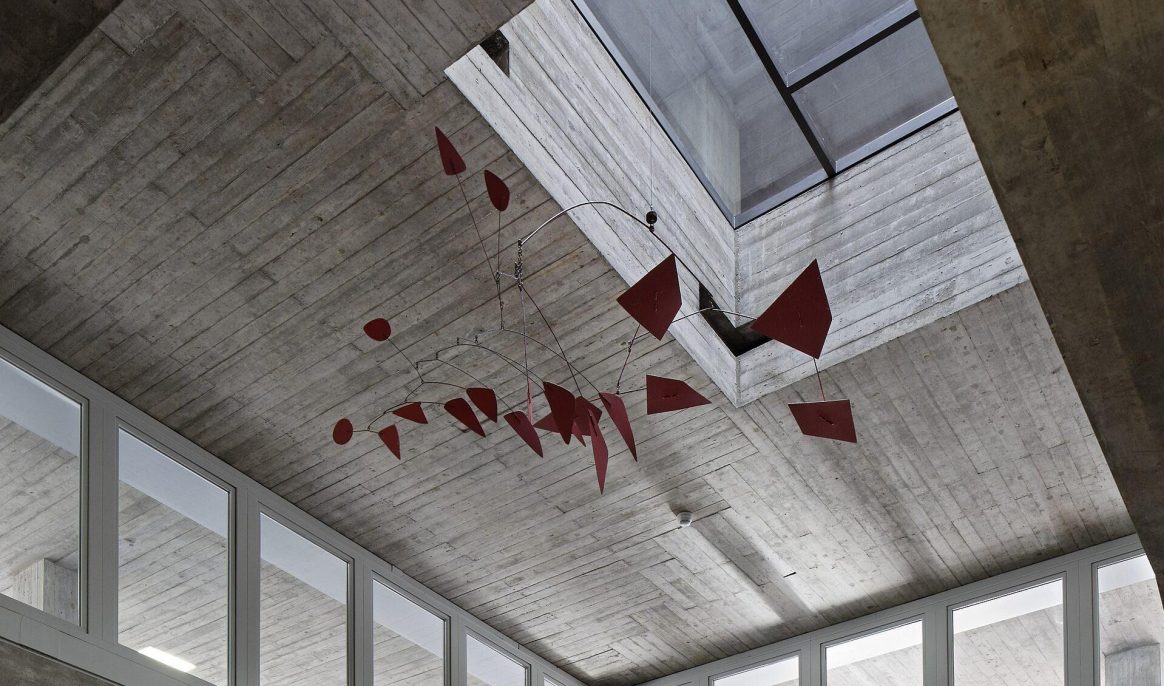
Born in the United States in 1898, Calder began by studying engineering before turning to the arts. It was in his Montmartre studios in the 1930s that he developed the idea of sculpture in motion, inspired by the circus and mechanical games. His mobiles, suspended and animated by air, became his hallmarks: colorful geometric shapes dancing in space, defying gravity.
At the Fondation Louis Vuitton, over 300 pieces are brought together, from small sculptural toys to XXL mobiles. The building, designed by Frank Gehry, itself becomes a case of light where the works float, creating a dialogue between architecture and sculpture. Here, Calder appears not only as an inventor of form, but also as a poet of gravity, capable of transforming space into a place of play and dreams. The retrospective shows the extent to which his work paved the way for many contemporary practices, from kinetic art to immersive installations.
Practical info
Calder, dreaming in balance
When: until August 16, 2026
Where: Fondation Louis Vuitton, 8 avenue du Mahatma Gandhi - Bois de Boulogne, Paris 16e
Photo: Interior of the University of St. Gallen (Switzerland) after the 2010 renovation: view of the grand staircase leading to the 2nd floor of the main building, with an Alexander Calder mobile in the center (October 2010).
Share: