© GualdimG via Wikicommons
-
Jun 03, 2026 10:00
Almost forgotten when she died in 1977, Lee Miller's family archives have given her a new lease of life: the Musée d'Art Moderne in Paris is hosting Tate Britain's major retrospective, the most ambitious ever devoted to this immense photographer.
Born in 1907 in Poughkeepsie, New York, Elizabeth "Lee" Miller began by posing in front of the lens before moving behind the camera. A star model for Vogue Magazine in the late 1920s, she went on to become one of the leading figures on the Paris surrealist scene alongside Man Ray, with whom she experimented with solarization. In the 1930s, she opened her own studio in New York, then followed her future husband, the painter Roland Penrose, to Europe before becoming an accredited war correspondent for the US army during the Second World War, documenting the liberation of Paris and the Dachau and Buchenwald camps. Her photographs of liberated Paris and Hitler's apartment (she photographed herself in the Nazi dictator's bath) have become iconic. She then retired to the English countryside, where she died in 1977, long reduced to the role of muse before being recognized as one of the great photographers of the 20th century.
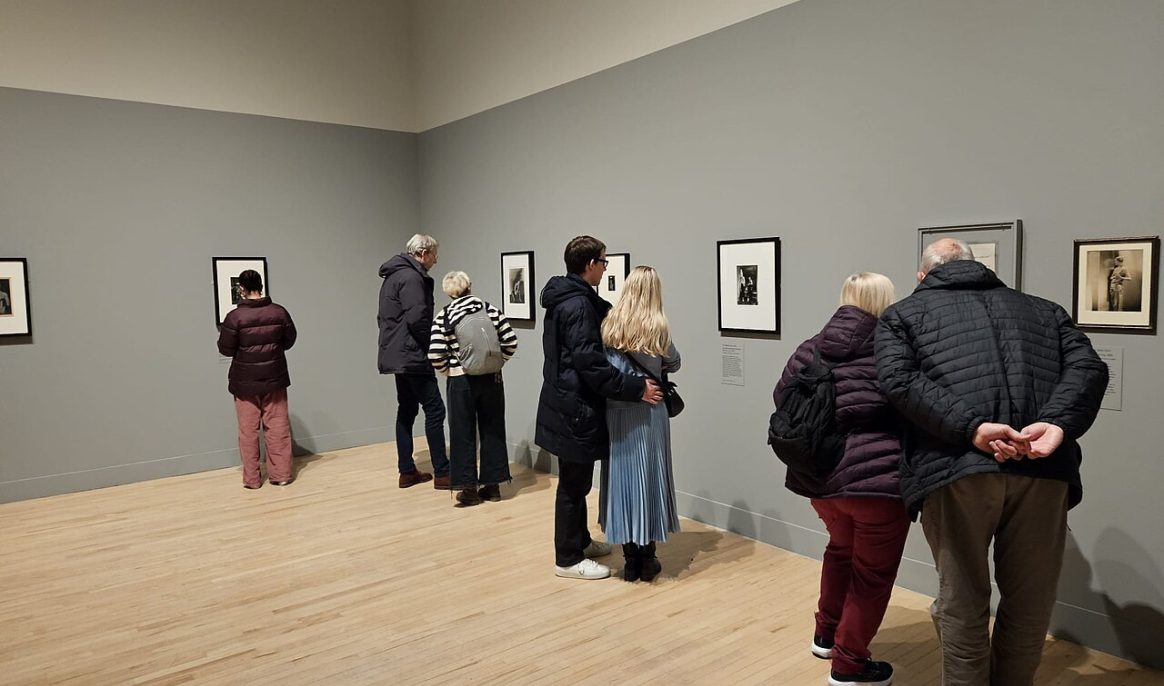
It is this multi-faceted life that the major retrospective designed by Tate Britain and hosted this summer by the Musée d'Art Moderne in Paris sets out to reconstruct. The exhibition retraces the artist's beginnings as a model, her surrealist years between Paris, New York and Cairo, her fashion portraits for Vogue, and her war reports from close-up of the fighting and ruins of Europe. The exhibition highlights the coherence of her vision, capable of moving from formal experimentation to the most frontal chronicling of wartime atrocities, without ever losing a certain poetic distance.
Almost forgotten at the time of her death in 1977, Lee Miller has enjoyed a marked resurgence in visibility in recent years, with monographic exhibitions, biographical works, a biopic starring Kate Winslet and, above all, the unearthing of her family archives, kept at Farley Farm in Sussex. This return to the limelight owes much to the patient work of her son and granddaughter, who manage the Lee Miller Archives. These holdings include almost 60,000 negatives, prints and documents, patiently researched by her successors, who have helped to reconstruct the breadth of her career. In 2025, Tate Britain used these archives to organize the largest retrospective ever devoted to the artist, which became the most popular photo exhibition in the history of the Tate.
The Musée d'Art Moderne in Paris is hosting this retrospective, with a few additions to reflect Lee Miller's attachment to the French capital. By locating this retrospective in Paris, the decisive city in her artistic formation, the Musée d'Art Moderne adds a local touch to this re-reading: prints, documents and archival images recall how much the capital counted in the construction of her identity as a photographer. Far from the frozen figure of the surrealist muse, this is an autonomous, inventive and profoundly modern artist, as recognized today by the historiography of twentieth-century photography.
Practical info
Retrospective Lee Miller
When: until August 2, 2026
Where: Musée d'Art moderne de Paris, 10 avenue du Président Wilson, Paris 16e
Photo: Lee Miller retrospective at Tate Britain (London), January 2026
Share: