© Etienne Tordoir
-
Jun 18, 2026 19:00
Ray Davies was born in 1944 in Muswell Hill (which would more or less provide the title for a 1971 album). The lead singer and principal songwriter of The Kinks is celebrating his 81st birthday today.
Like the Gallagher brothers in Oasis, brothers Ray and Dave Davies often bickered. An outstanding melodist with a unique flair for songwriting, Ray is undoubtedly one of the most influential British songwriters in the history of British rock. He's unmatched in his ability to depict social realities, as he does, for example, in “Dead End Street,” which tells the story of the working-class neighborhood in which he was born. He was also the driving force behind the creation of so-called concept albums that play like a movie rather than a simple collection of songs. The Kinks’ golden-age albums, such as “The Village Green Preservation Society” (1968), “Arthur Or The Decline And Fall Of The British Empire” (1969), “Lola Versus Powerman and the Moneygoround” (1970), and of course “Muswell Hillbillies” (1971), are various facets of the literary ambition that permeates the English band’s repertoire.
Starting with the 1978 album Misfits, Dave and his thunderous guitar gradually took the lead in the band. They veered squarely into hard rock with the live album “One For The Road” and enjoyed growing (though short-lived) success in the United States.
Over the past few decades, Ray Davies has received several honors (he was knighted as a Knight Commander by Queen Elizabeth in 2014), entrusted his greatest songs to a choir (in 2009, most notably a version of “Days”), explored the solemnity of the grand organ for the Cavendish Music Library (2024), and sent us postcards from the land of Uncle Sam with his last true album, aptly titled “Americana”(2017)...
In 2026, while the musical “Sunny Afternoon” was enjoying a resounding success in the United Kingdom, Ray Davies found himself unwittingly caught up in a controversy he had in no way sparked. Following an interview with American artist Moby in the British daily The Guardian, in which Moby declared that the lyrics to “Lola”— the iconic 1970 song by The Kinks—were not only “crude” but also “transphobic,” he was left with no choice but to step into the fray with a defense steeped in the irony that has always been his trademark. Following in the footsteps of his brother Dave—the hothead of the family—he simply remarked,“Who the f*ck is Moby?” Some leading voices in the transgender community, such as the highly respected singer Jayne (formerly Wayne) County, have rightly pointed out that this song was written more than a quarter of a century ago and that, at the time, it helped break certain taboos. As a reminder, “Lola” tells the story (in a nutshell) of a rather naive young man, fresh off the countryside, who meets the bewitching Lola in a club in Soho, London’s red-light district.
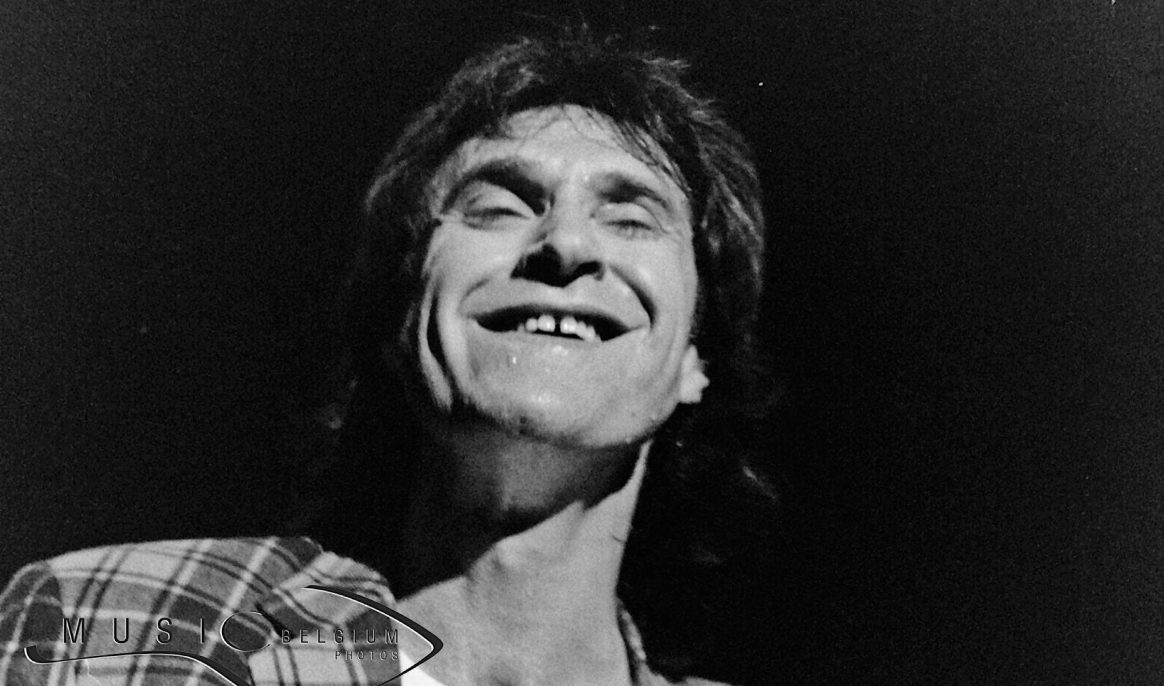
Photo: Ray Davies with The Kinks on stage at the Cirque Royal in Brussels (Belgium) in April 1985
Share: