© Etienne Tordoir
-
Jun 21, 2026 15:00
He was born in Glasgow, Scotland, in 1961 and still embodies that 'Smalltown Boy' he sang about with Bronski Beat in 1984.
Raised in the working-class neighborhood of Ruchill, he had a difficult adolescence that was marked by rejection due to his homosexuality. It’s worth noting that, until 1967, acknowledging homosexuality in court was punishable by imprisonment and other atrocities in both England and Wales. And in Scotland, where Jimmy grew up, it wasn’t until 1982 that the first steps toward decriminalization were taken.
So when he left his hometown in 1978, it was more of an escape—essential in his eyes—than a stepping stone towards fame. His early days in the capital were far from easy. Shabby squats and a precarious existence were the order of the day.
In 1983, he formed Bronski Beat with Larry Steinbachek and Steve Bronski. Beneath a veneer of electro-pop laced with disco influences, their debut album The Age of Consent is also—and perhaps above all—a social and political manifesto. On the album cover, there’s a chart comparing the age of consent for gay men in different countries. Eye-opening! Highly autobiographical, their song “Smalltown Boy” (1984) paints a stark picture of a young gay man’s frantic escape from homophobia. In the brutal and realistic music video that accompanies the song, Somerville naturally plays himself, leaving a lasting impression
Even before the acronym became widely used, this chorus became an LGBTQIA+ anthem, directly addressing the family and social rejection caused by coming out as gay. The album also features some superb ballads, such as the pacifist “No More War,” as well as a handful of impeccable covers, such as Donna Summer’s “I Feel Love,” a true anthem of the gay community, or the polar opposite, “It Ain’t Necessarily So,” borrowed from Gershwin’s “Porgy & Bess.” But Somerville set out to explore new horizons, even before recording a second album.
Without ever abandoning his activism, he went on to found The Communards, based on fairly similar musical and political foundations. The group recorded two albums and added another gay anthem to its repertoire with a cover of “Don’t Leave Me This Way,” which had already been popularized a few years earlier by Thelma Houston, one of the queens of disco. After the group’s breakup in 1987, the singer—known for his soprano voice—embarked on a solo career under his own name. As expected, his first solo effort, “Read My Lips” (1989), featured several memorable covers, such as Sylvester’s “You Make Me Feel” and Françoise Hardy’s “Comment te dire adieu” —an artist Somerville truly idolizes. "Homage," his sixth album, dates back to 2015. Written with his partner John Winfield, the twelve original songs (no covers this time) once again pay tribute to the disco music that means so much in Somerville’s life.
And the last time I saw him on stage in 2019, he hadn’t lost any of his inimitable falsetto…
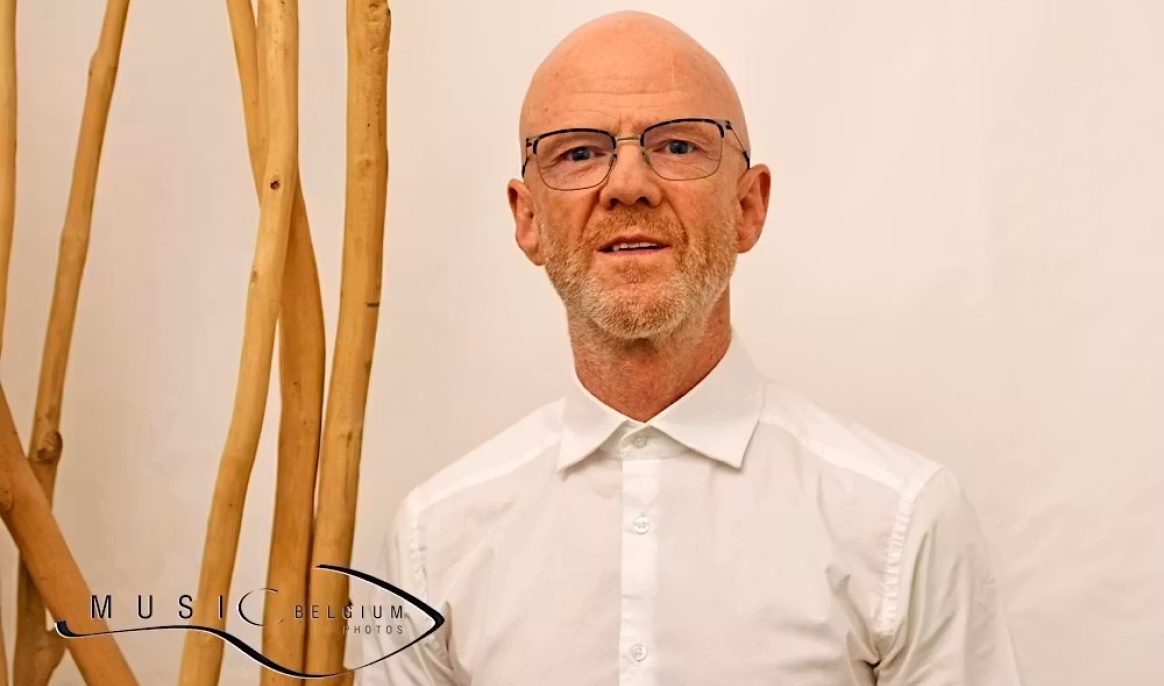
Photo: Portrait of Jimmy Somerville backstage at the W Festival in Waregem (Belgium) on August 15, 2019
Share: